Concrete Patios: Compare Quotes, Then Decide
Request an estimate, no obligation
A concrete patio is a long-term choice, so it pays to slow down at the start. Size, base prep, finish and drainage all change the price. Two quotes can look far apart and still describe different jobs.
Laurabonus Concrete is a referral service. We connect homeowners in Peabody and the Peabody area with independent local providers who pour concrete flatwork. The providers do the work, not Laurabonus Concrete. Gather a few written quotes, read each line, and decide on your own schedule. Plan before panic.
Start with the plan, not the price
Most patio regrets begin with a rushed number. Before you ask anyone for a quote, decide what the space is for. Dining? A grill? A fire pit and a few chairs? Compare, then decide.
A clear plan lets every provider price the same job. That makes the quotes easier to line up.
Why concrete stays on the short list
Concrete is sturdy, flat and fairly simple to maintain. It handles furniture, grills and foot traffic without fuss. It also takes many looks, from plain to patterned.
The trade-off is that it can crack over time, and fixing a poured slab is harder than swapping a few pavers. Good prep helps lower that risk.
What a patio quote should list
Read the quote line by line. A solid one usually names these items:
- Removal of any old slab or sod
- Excavation and compacted base material
- Forms, edges and any steel reinforcement
- Concrete thickness and mix type
- Finish and sealing
- Cleanup and haul-away
If a line is missing, ask about it. A short quote is not always a cheap job. It may just be a vague one.
Size it for real life
Price rises with every square foot, so size matters. Measure a table, chairs and walking room first. A four-person dining set often needs roughly 10 by 10 feet, with extra space for pulling chairs out.
Building a bit larger costs less per foot than adding on later. But a slab bigger than you need is money you cannot use.
Thickness and base: where the hidden money goes
A typical patio slab is about four inches thick. Some providers suggest more where furniture is heavy or the soil is soft. Extra thickness costs more, but it can add strength.
The base under the slab matters just as much. Compacted gravel helps the concrete stay level through wet springs and cold snaps. A quote that skips base prep may look cheaper for a reason.
Finish options and what each adds
A broom finish is the usual starting point. It gives grip and costs the least of the common choices. Exposed aggregate shows small stones and hides wear well. Colored concrete adds tone without much texture.
Stamped looks
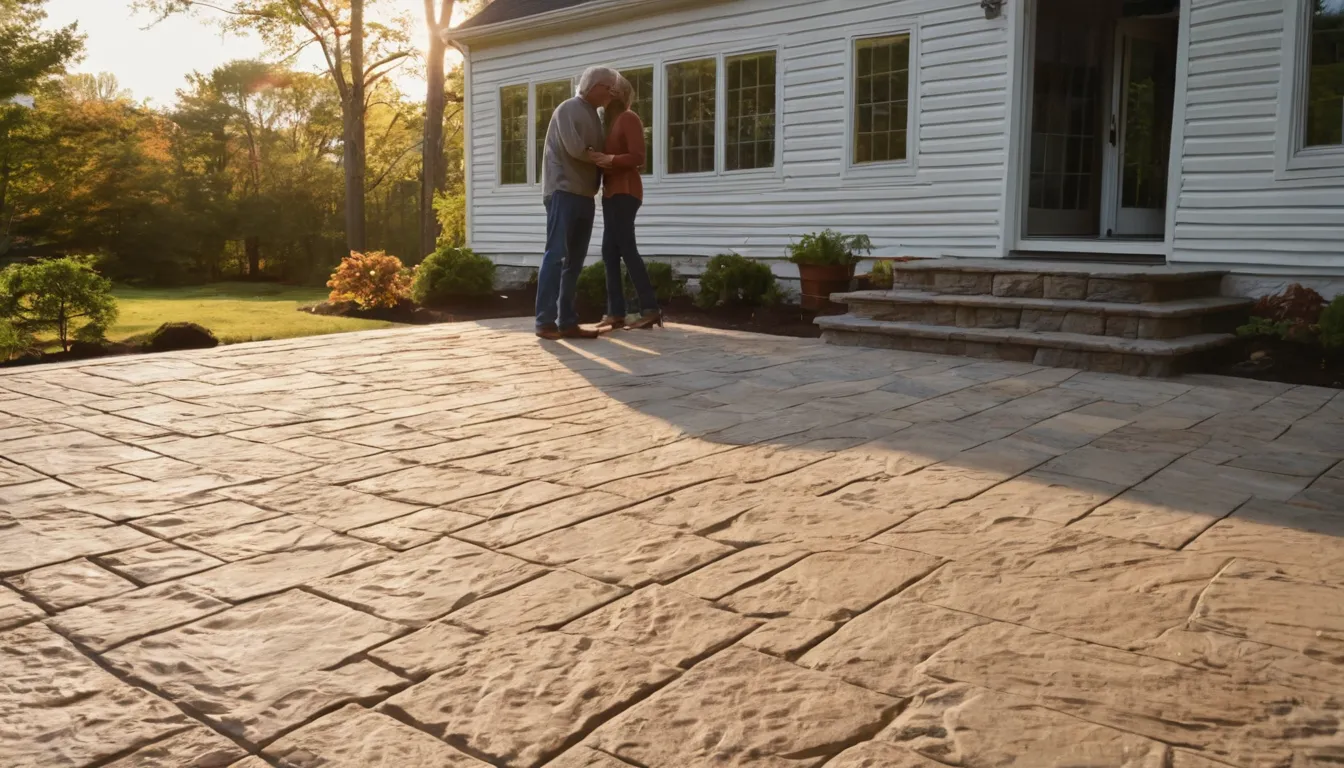
Stamped concrete patios mimic stone, brick or slate. The pattern and color work add labor, so the price climbs. Ask to see sample photos of finished jobs, not just brochures.
Think about winter early
Cold snowy winters and repeated frost cycles are hard on flatwork. Ask each provider about air-entrained concrete, control joints and sealing. These details help the slab handle ice, thaw and de-icing products.
Also ask what they do about the season. Pours need mild temperatures to cure well, so schedules can shift with the weather.
Slope and drainage matter
A patio should shed water away from the house. A gentle slope, often about a quarter inch per foot, is a common rule of thumb. Water that pools near the wall can seep toward the foundation.
Older homes need extra care
Older houses with stone or block foundations and full basements can be sensitive to moisture. If you already see damp walls or cracks inside, talk with foundation repair experts before you pour. A new slab should not hide a problem that is still active.
When to book
Pour season can fill up. If you want the patio ready for warm weather, start gathering quotes early. Request a callback to check provider availability in your area.
Booking early does not mean saying yes early. You can compare offers and take your time.
How to compare providers
Put the quotes side by side. Check thickness, base depth, finish, square footage and cleanup. Then check the payment terms and the start window.
Ask each provider about proof of insurance and any local permit needs. Confirm those details directly with the provider, since Laurabonus Concrete does not vouch for individual work.
Questions worth asking
- How will water drain off this slab?
- Where will control joints go?
- What happens if the ground is soft once you dig?
- How long before we can use it?
- Is sealing included?
Clear, patient answers are a good sign.
Warning signs in a quote
Be careful with pressure to sign today. Watch for large cash deposits, no written scope, or a price that skips base work. A fair provider will let you think it over.
Signs your old patio is near the end
Many old slabs warn you first. Look for cracks that widen, edges that crumble, surfaces that flake, or sections that tilt toward the house. Sunken spots that hold water are another hint.
Catching these early lets you plan, budget and compare quotes calmly. If you also have a cracked driveway, concrete driveway repair is a separate job, so ask providers to price it apart.
Caring for the new slab
Keep heavy loads off until the provider says it is ready. Sweep often. Seal on the schedule the provider suggests. Go easy on de-icing salts in the first winter, and shovel with a plastic blade.
Decide on your own schedule
There is no rush to choose. Gather your written quotes, read each one twice, and pick the plan that fits your yard and budget. Request an estimate whenever you are ready.
What's Included
Site and Demo
Clearing sod, removing an old slab and marking the layout so the new patio sits where you want it.
Base and Forms
Digging to depth, compacting gravel and setting forms so the slab has a steady, level foundation to rest on.
Pour and Finish
Placing, leveling and finishing the concrete, plus joints cut to guide where cracks may form.
Sealing and Cleanup
Applying sealer if specified and clearing forms and debris from the yard.
Typical patio costs and what moves them
These are typical U.S. ranges. Your price depends on size, access, soil, finish and local labor. Get written quotes and compare each line before you decide.
| Item | Typical range | Notes |
|---|---|---|
| Basic broom-finish slab | $6 – $12 per sq ft | Common starting point for simple layouts |
| Stamped or patterned finish | $12 – $22 per sq ft | Pattern and color work add labor |
| Exposed aggregate | $8 – $18 per sq ft | Textured look that hides wear |
| Excavation and base prep | $1 – $4 per sq ft | Rises with soft soil or poor access |
| Old slab removal | $2 – $6 per sq ft | Depends on thickness and hauling |
| Grading or drainage changes | $500 – $3,000 | Varies with slope and water issues |
How It Works
Share Your Plan
Tell us the size, finish and timing you have in mind, using the request form or by phone.
Get Matched Locally
A local provider in our network contacts you to talk through the details.
Compare Written Quotes
Review each quote line by line, and ask questions about anything unclear.
Choose When Ready
Pick a provider on your timeline, or wait. The decision is entirely yours.
Why Call Laurabonus Concrete
Compare, Then Decide
Gather written quotes from independent providers and weigh them line by line at your own pace.
Clear Trade-offs
See how size, finish and base prep change the price before you commit to anything.
No Pressure
Requesting an estimate carries no obligation, so you can say yes, no or not yet.
Local Providers
You are matched with independent providers who work near you and know the regional weather.
Other Services
Need concrete patios in Peabody?
Planning a driveway, patio or stamped finish? Request an estimate or Request a callback to check provider availability. There is no obligation.
No obligationConcrete Patios FAQ
How much does a concrete patio cost?
Typical U.S. prices run from about $6 to $12 per square foot for a basic slab, and more for stamped or colored finishes. Site prep, size and local labor change the total, so get written quotes.
How thick should a concrete patio be?
Most patios are about four inches thick over a compacted gravel base. Heavy loads or soft soil may call for more. Ask each provider to state thickness and base depth in writing.
When is the right time to pour a patio?
Mild, dry weather is ideal because concrete cures better. In colder regions, spring through early fall is common. Providers book up, so ask early about availability and scheduling.
Get in touch
Planning a driveway, patio or stamped finish? Request an estimate or Request a callback to check provider availability. There is no obligation.
No obligation